Swiss Data Protection Standards and Their Ripple Effects on Casino Rankings Plus User Trust Metrics in Regulated Gaming Applications
Geschrieben von Carlo Griffin · 22.10.2026
Swiss Data Protection Standards and Their Ripple Effects on Casino Rankings Plus User Trust Metrics in Regulated Gaming Applications
Overview of Swiss Data Protection Framework
Switzerland maintains a comprehensive data protection regime through the Federal Act on Data Protection which sets strict requirements for the collection, processing, and storage of personal information across all sectors including regulated gaming, and operators must demonstrate compliance through documented procedures that align with both national rules and international standards such as those referenced in cross-border agreements.
Observers note that the revised FADP which entered full effect in 2023 introduced enhanced obligations around transparency, data subject rights, and breach notification timelines, while the law requires data protection impact assessments for high-risk processing activities that frequently occur in digital casino environments where player profiles, transaction histories, and behavioral analytics intersect.
Integration with Regulated Gaming Platforms
Regulated Swiss gaming applications must incorporate data protection measures at every layer of their architecture from initial user registration through ongoing gameplay sessions and payment processing, and this includes pseudonymization techniques, encryption protocols, and granular consent mechanisms that allow players to control how their information is used beyond core service delivery.
Research indicates that platforms operating under Swiss licensing face mandatory audits by independent bodies to verify adherence, and non-compliance can result in restrictions on data processing activities or suspension of gaming licenses, creating direct pressure on operators to maintain robust technical and organizational safeguards throughout their systems.
Influence on Casino Rankings and Visibility
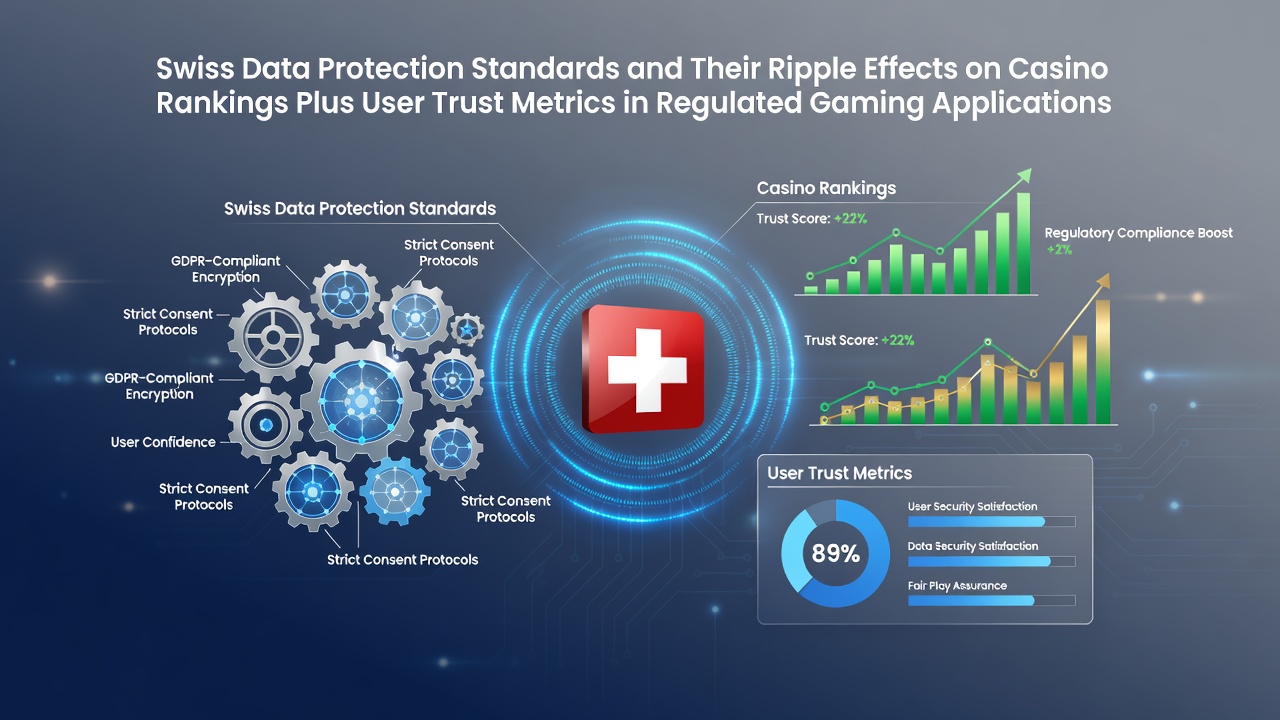
Casino ranking systems operated by comparison platforms and regulatory portals incorporate compliance metrics that reflect data protection performance, and operators demonstrating strong adherence through third-party certifications often receive preferential placement in search results and recommendation lists because these signals correlate with lower operational risk profiles.
Figures from industry monitoring services reveal that platforms with documented data protection certifications experience measurable improvements in algorithmic visibility on aggregator sites, while those facing enforcement actions or delayed compliance reporting see corresponding declines in organic traffic and user acquisition rates over successive reporting periods.
Effects on User Trust Metrics
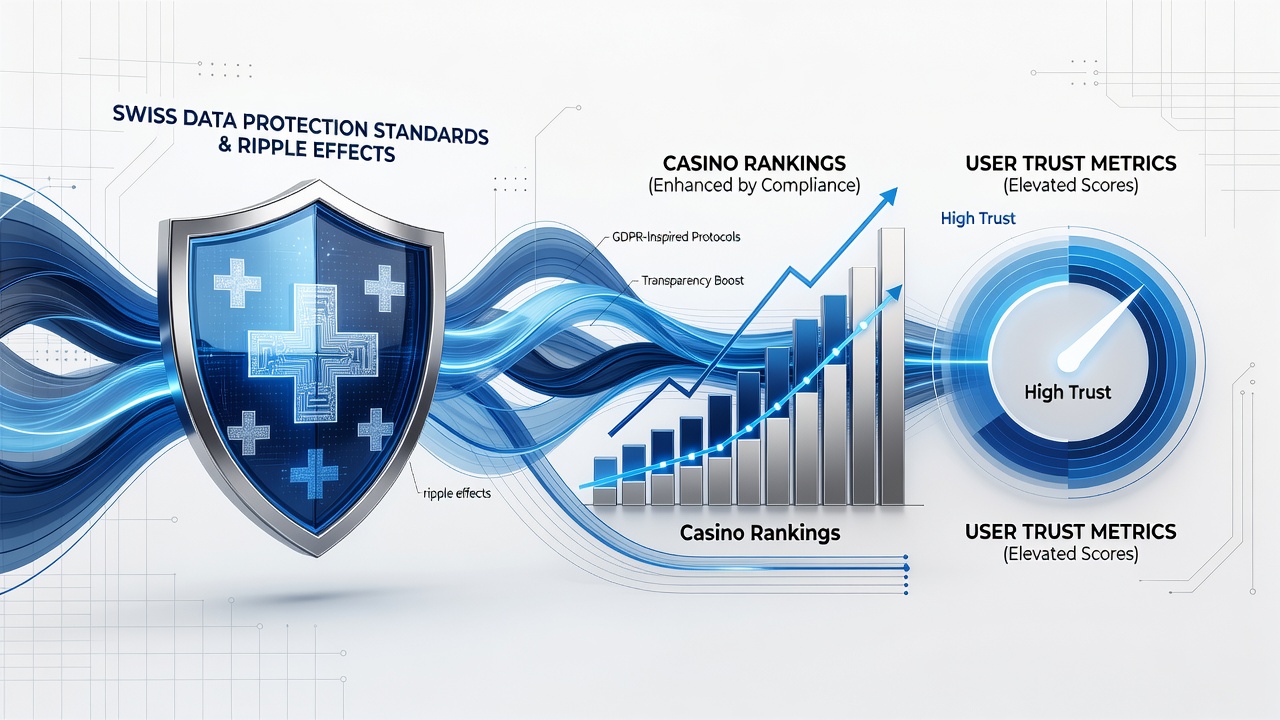
Trust metrics collected through player surveys and platform analytics show that users assign higher confidence scores to applications displaying clear data protection disclosures and verified security certifications, and this pattern holds across demographic segments with particularly pronounced effects among players who engage in higher-volume transactions or share sensitive verification documents during onboarding.
Data from regulatory compliance reports demonstrate that transparent handling of data subject requests correlates with improved retention rates and reduced account closure incidents, while incidents involving unauthorized data access trigger immediate reputational impacts that extend beyond direct regulatory penalties into long-term user sentiment measurements tracked by independent research firms.
Developments Scheduled for October 2026
Scheduled updates to Swiss data protection guidance in October 2026 will introduce refined requirements for automated decision-making processes in gaming applications, particularly around responsible gambling tools that rely on behavioral profiling, and operators are preparing enhanced documentation protocols to address these forthcoming obligations ahead of the implementation date.
According to the Swiss Federal Data Protection and Information Commissioner, these adjustments aim to align national practices more closely with evolving international benchmarks while preserving the core principles of proportionality and purpose limitation that have long characterized Swiss regulatory philosophy.
Comparative Context from Other Jurisdictions
Analyses prepared by academic researchers at institutions such as the University of Toronto highlight parallels between Swiss requirements and frameworks applied in Canadian provincial gaming commissions, where similar emphasis on data minimization and player consent produces comparable effects on platform design choices and ranking methodologies used by review aggregators.
A separate study published through the Australian Research Council examined cross-jurisdictional data flows in online gaming and found that Swiss-aligned operators often achieve higher trust scores in multi-market deployments because their foundational compliance architecture supports adaptation to varying regional expectations without fundamental system overhauls.
Conclusion
Swiss data protection standards continue to shape operational priorities within regulated gaming applications through direct compliance mandates and indirect influences on visibility mechanisms and user confidence indicators, and the framework's evolution through scheduled 2026 updates will likely extend these ripple effects into new areas of automated processing and cross-border data handling practices.